
Skipping scheduled car maintenance risks voiding warranties, costly repairs, safety hazards, and lower resale; keep records and follow the owner's manual.
Published Date:
27 janv. 2026
Last Updated:
27 janv. 2026
What Happens if You Miss Scheduled Maintenance
Skipping scheduled maintenance can cost you big time. It risks voiding your car’s warranty, leads to expensive repairs, and compromises safety. Regular tasks like oil changes, brake checks, and tire rotations aren’t just suggestions - they’re critical to keeping your car running smoothly and protecting its value.
Key Points:
Warranty Issues: Manufacturers may deny claims if maintenance records are missing or tasks are ignored.
Costly Repairs: Small oversights, like skipping an oil change, can lead to engine damage costing thousands.
Safety Risks: Worn brakes, uneven tires, or low tire pressure increase accident risks.
Lower Resale Value: Neglecting maintenance can make your car less appealing to buyers, cutting its worth.
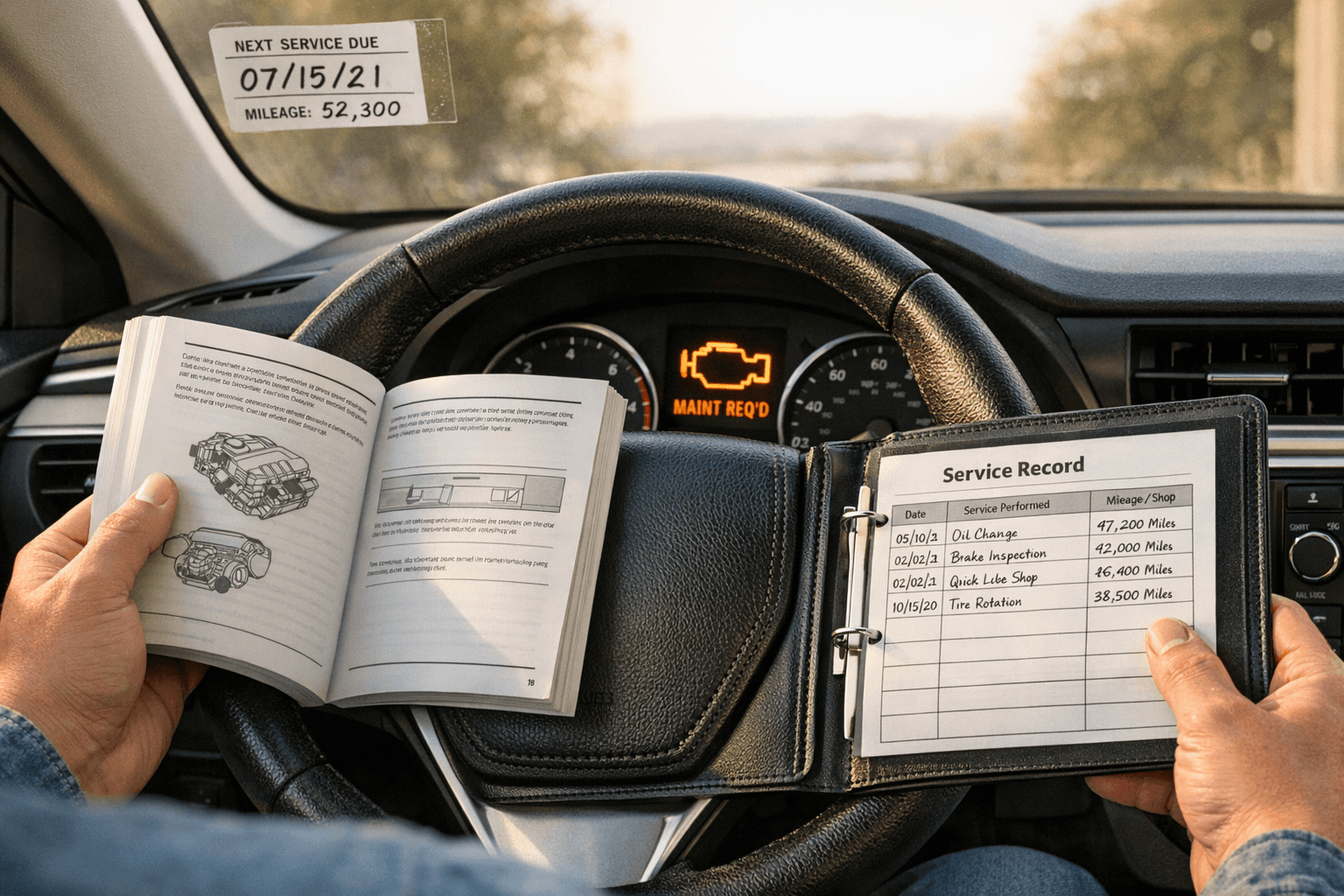
Keeping up with maintenance is simple: follow your owner’s manual, track services, and keep receipts. It’s the easiest way to avoid unnecessary expenses and keep your car safe and reliable.
What Happens If You Never Change Your Car’s Oil?
What Happens When You Skip Scheduled Maintenance
Skipping your car's scheduled maintenance isn't just a minor oversight - it can void warranties, lead to expensive repairs, and even compromise your safety. Ignoring these essential tasks can also hurt your car's resale value in the long run.
How Missed Maintenance Can Void Your Warranty
When you file a warranty claim, the manufacturer or warranty provider will likely request proof that you've kept up with regular maintenance. The Federal Trade Commission (FTC) emphasizes this point:
The warranty company could ask for your maintenance records. Keep records of repairs and maintenance... Otherwise, your claim might be denied [4].
For instance, if you can't show evidence of routine oil changes, an engine failure caused by oil sludging could result in your claim being denied - even if your vehicle is under warranty. This could leave you on the hook for thousands of dollars in repairs. This applies to both factory warranties and extended service contracts, which often cost between $1,000 and $5,000 [8]. Ford Motor Company also warns:
Failure to perform scheduled maintenance and regularly inspect your vehicle may result in vehicle damage not covered by the New Vehicle Limited Warranty or Ford Protect Extended Service Plan [2].
While manufacturers must prove neglect caused the damage before denying a claim, keeping detailed maintenance records is your best defense. Without them, you risk paying hefty repair bills out of pocket.
Higher Repair Bills Down the Road
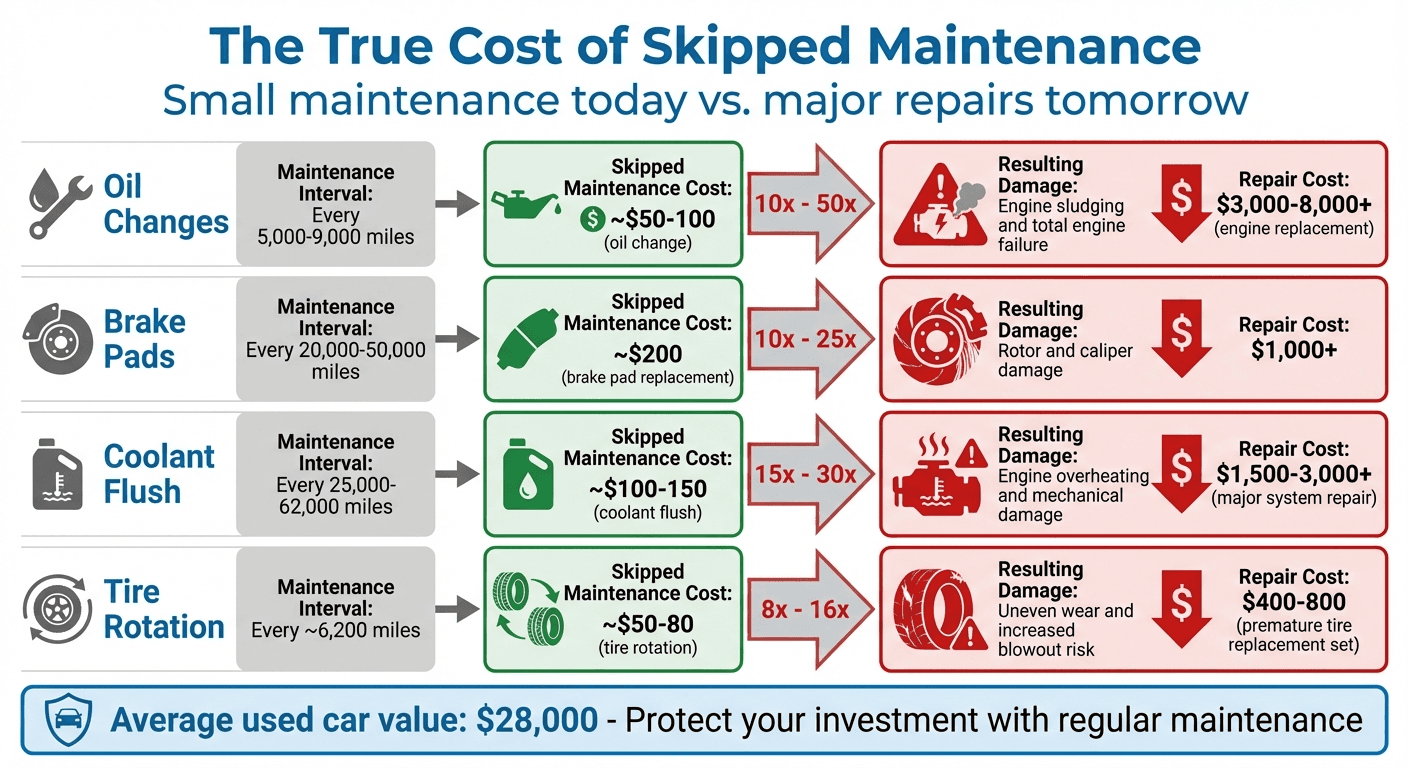
Skipping small maintenance tasks today can lead to major expenses tomorrow. Take oil changes, for example. Typically required every 5,000 to 9,000 miles, neglecting them can cause oil sludging, which blocks critical engine passages and deprives your engine of lubrication [7]. The result? A complete engine replacement costing thousands of dollars.
This pattern extends to other parts of your vehicle. For instance:
Brake Pads: Skipping a $200 brake pad replacement could lead to rotor and caliper damage, turning a small fix into a $1,000+ repair [8][10].
Coolant Flushes: Neglecting these (recommended every 25,000 to 62,000 miles) can cause engine overheating and severe mechanical damage [10].
Cabin Air Filters: A clogged filter can strain your HVAC system, reducing performance and increasing wear [7].
Here's a quick breakdown of how skipping maintenance adds up:
Skipped Maintenance | Interval | Potential Damage | Cost Impact |
|---|---|---|---|
Oil Changes | 5,000 – 9,000 miles | Engine sludging and total engine failure | Thousands of dollars |
Brake Pads | 20,000 – 50,000 miles | Rotor and caliper damage | $1,000+ |
Coolant Flush | 25,000 – 62,000 miles | Engine overheating and mechanical damage | Major system repair |
Tire Rotation | ~6,200 miles | Uneven wear and increased blowout risk | Premature replacement |
Safety Hazards from Neglected Systems
Beyond financial costs, skipping maintenance can put your safety at risk. Worn brake pads reduce your stopping power, while tires with low tread increase braking distances and the risk of hydroplaning. Even if your tires look fine, they have a shelf life - rubber degrades after 5 to 7 years, raising the likelihood of blowouts [7].
Visibility is another critical safety concern. Worn wiper blades or an empty washer fluid reservoir can leave you struggling to see during heavy rain or when road grime clouds your windshield [7]. A clogged air filter can also force your engine to work harder, hurting fuel efficiency and potentially damaging internal components [7].
The Federal Trade Commission sums it up:
Ignoring maintenance can lead to trouble: specific parts - or an entire system - can fail [6].
Since vehicle systems are interconnected, neglecting one area can create a domino effect, leading to more failures. This could leave you stranded - or worse, in a dangerous situation on the road.
How Skipped Maintenance Affects Resale Value
Neglecting your car's maintenance doesn't just create warranty headaches - it also takes a serious toll on its resale value.
Skipping routine care can lead to a noticeable drop in your car's market worth. With the average used car price sitting at around $28,000 [12], even a slight decrease in resale value could mean losing hundreds or even thousands of dollars. Buyers are quick to spot signs of neglect, and it can cost you.
Why Maintenance Records Matter to Buyers
Keeping detailed maintenance records can be a game-changer when selling your car. These records show that you've taken good care of the vehicle, making buyers feel more confident and increasing the car's value [11].
Buyers want assurance they’re not walking into someone else’s problems. A complete history of regular oil changes, tire rotations, brake checks, and other routine services provides that peace of mind. Dealerships, in particular, value cars that have been serviced by certified technicians, often offering better trade-in deals for such vehicles [11][13].
Sticking with the same shop for servicing also allows mechanics to track wear-and-tear patterns over time. This gives buyers a clearer idea of when future repairs might be needed, reducing the risk of unexpected issues. This predictability is especially appealing as the average age of cars on U.S. roads reached 12.6 years in 2024 [13].
Reduced Resale Offers from Neglected Care
Neglecting maintenance can quickly lower resale offers. One of the first things buyers notice is the condition of the tires. Worn-out or under-inflated tires often signal a lack of overall care [11][7]. Mismatched tires, uneven tread wear, or cracked sidewalls suggest skipped rotations or alignment issues [7][14].
Pre-purchase inspections, which typically cost $100–$150, often reveal deferred repairs that can significantly reduce offers [14]. For example, if an inspection uncovers a needed head gasket replacement ($1,915–$2,220) or worn shocks and struts ($924–$1,043), buyers will factor those costs into their offers [13].
The financial consequences of neglect are clear. Skipping a simple $100 oil change could lead to engine damage costing thousands to fix, wiping out your car's equity [11]. As Dave & Rays Automotive puts it:
Buyers and dealers will always pay a premium for a car they know has been taken care of [11].
Without proof of proper maintenance, you're likely to lose money. Keeping thorough records not only protects your warranty but also helps you secure the best possible resale price.
How to Stay on Top of Scheduled Maintenance
Keeping up with scheduled maintenance doesn’t have to be complicated. With a little planning, you can avoid warranty headaches, safety risks, and a drop in your car’s resale value.
Set Up a Maintenance Tracking System
Start by checking your owner’s manual for the recommended service intervals, and keep a detailed log of all maintenance activities, including receipts. Many modern vehicles now come equipped with systems that monitor driving conditions and notify you when maintenance is due. For example, oil changes in some cars can stretch to 10,000 miles or even a year, depending on the vehicle’s monitoring system [3][17].
Maintaining accurate records isn’t just about staying organized - it’s also crucial for warranty claims and preserving resale value [16][2][17]. Beyond relying on vehicle alerts, make it a habit to check your tire pressure, tread, and fluid levels every month. These quick self-checks can help you catch small issues before they turn into expensive problems [15][16][2]. Additionally, replace your car’s battery every 3–5 years and rotate your tires every 5,000–8,000 miles to keep everything running smoothly [15].
Once your tracking system is in place, the next step is finding a service provider you can trust.
Find Reliable Service Providers
Having a dependable mechanic on hand is essential, so take the time to choose wisely before you’re in a pinch. Ask for recommendations from friends, family, or colleagues, and make sure the shop you’re considering has up-to-date Automotive Service Excellence (ASE) certifications and valid state licenses [6]. You can also check with your local consumer protection agency or State Attorney General’s office for any complaint history tied to the shop [6].
"Loyalty to one shop is most often rewarded with technicians who know your particular vehicle, and with an honest appraisal of what's needed." - John Ibbotson, Chief Mechanic, Consumer Reports [18]
Not all service providers are equal, and different shops excel in different areas. For instance, dealerships are your go-to for warranty repairs, safety system recalibrations, and software updates [13]. On the other hand, independent shops often shine when it comes to affordability and straightforward service, making them a solid choice for routine tasks like oil changes and major engine repairs [13][3]. If you’re looking for the best deal on tire installation or wheel alignments, chain repair shops usually offer the most competitive pricing [13]. Always request a written estimate before approving any repairs, and don’t hesitate to seek a second opinion for high-cost fixes [6].
Financing Options for Maintenance Costs
Routine maintenance doesn’t have to break the bank. On average, you’ll spend a few hundred dollars a year on standard upkeep [19]. For the first 30,000 miles, the costs typically range between $658 and $871 [19]. If upfront expenses are a concern, prepaid maintenance plans can help. These plans allow you to lock in current rates and spread payments out over time [18]. Another option is an auto service contract, often referred to as an "extended warranty." These contracts can cover specific repairs and scheduled services like oil changes, though their cost can vary widely - from a few hundred dollars to several thousand [5][4].
The most important thing? Stick to your manufacturer’s recommended schedule. Don’t let anyone convince you to pay for maintenance that isn’t actually due yet [19][1].
Conclusion: The Benefits of Keeping Up with Maintenance
As we’ve seen, skipping maintenance can lead to some serious consequences - voided warranties, higher repair bills, and a drop in resale value. While it might seem like you’re saving money by delaying routine care, the reality is quite the opposite. Major repairs, safety hazards, and warranty disputes often result from neglect. Engines are pricey, but oil? That’s a bargain in comparison [9].
Key Takeaways
Keeping up with maintenance isn’t just a good idea - it’s essential for both short-term reliability and long-term savings. Routine upkeep can stop small problems from snowballing into major disasters, like an engine seizing due to skipped oil changes. Regular checks on critical systems like tires, brakes, and suspension also help lower the risk of accidents. With consistent care, your car can easily surpass 100,000 miles of dependable performance [9].
Another crucial point: your warranty depends on you following the maintenance schedule. Warranty providers are within their rights to deny claims if you can’t prove you’ve kept up with the manufacturer’s guidelines. This makes holding onto every service receipt a must - not just for warranty protection but also for resale value. Potential buyers are far more likely to trust a car that comes with a well-documented maintenance history [4][5].
At Hello Motors, we’re here to help you protect your investment with regular, reliable maintenance.
Following the recommendations in your owner’s manual isn’t just about saving money - it’s about keeping yourself safe and preserving the value of your vehicle. Make it a habit to check your fluids monthly, address recalls promptly using your VIN on the NHTSA website, and stick to the manufacturer’s schedule. As TrueCar wisely puts it:
An ounce of prevention really is worth a pound of cure [7].