Compare 10 vehicles with the lowest five-year depreciation - trucks, hybrids, SUVs and sports cars that retain the most resale value.
Published Date:
Jan 27, 2026
Last Updated:
Jan 27, 2026
10 Cars with Lowest Depreciation Rates
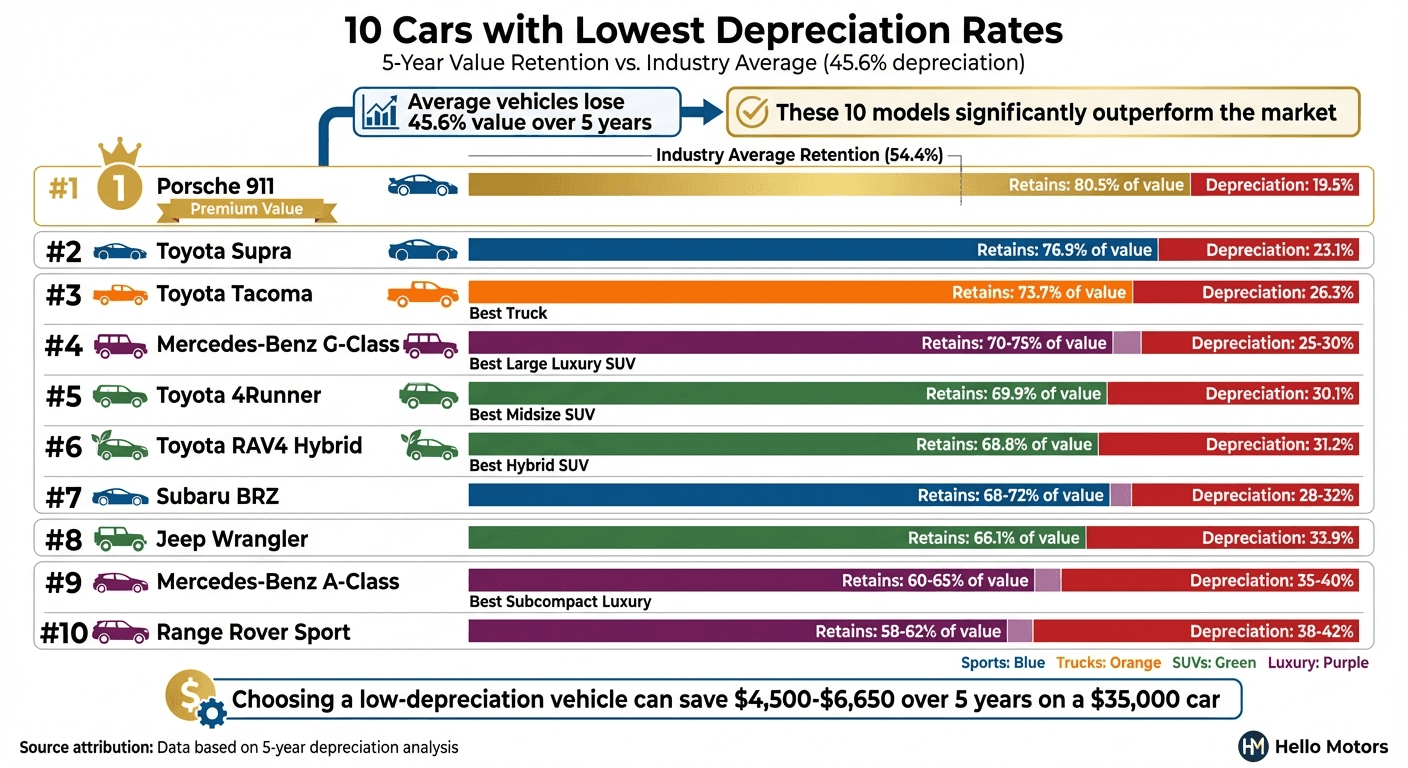
Depreciation is the biggest hidden cost of owning a car. On average, vehicles in the U.S. lose 45.6% of their value over five years. But not all cars depreciate equally. Some models hold their value far better, saving you thousands when it’s time to sell or trade in.
Here’s a quick look at the top cars with the lowest depreciation rates:
Porsche 911: Retains 80.5% of its value over 5 years.
Toyota Tacoma: Holds 73.7% of its value, leading the truck category.
Toyota 4Runner: Keeps 69.9% of its value, excelling among midsize SUVs.
Jeep Wrangler: Retains 66.1% after 5 years, thanks to its iconic design and off-road capability.
Toyota RAV4 Hybrid: Maintains 68.8% of its value, outperforming most hybrids.
1. Toyota Tacoma
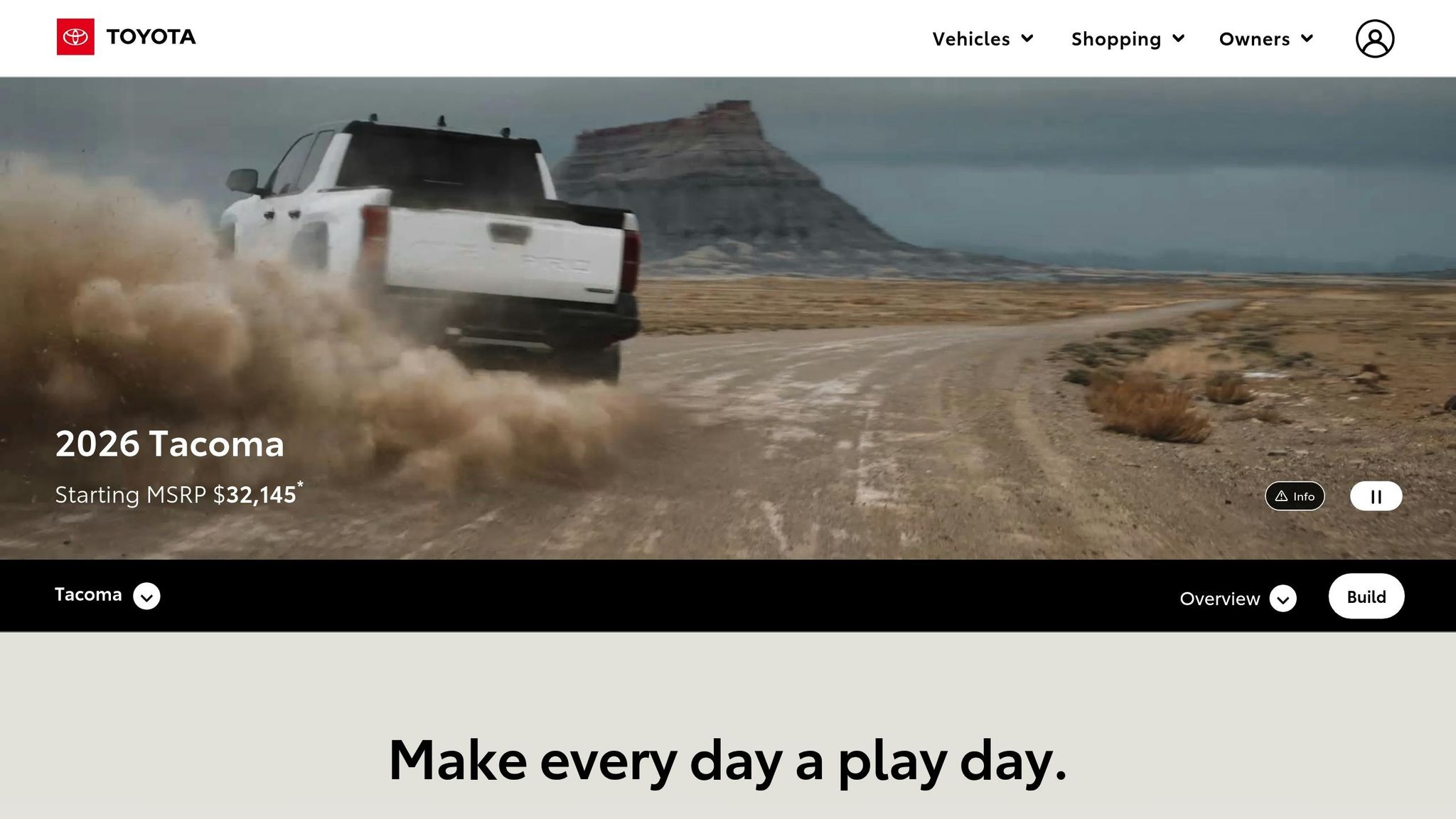
The Toyota Tacoma is a standout when it comes to holding its value among pickup trucks. After five years, it retains about 73.7% of its value, meaning it only loses 26.3%, compared to the average loss of 45.5%. Even after three years, it holds onto 86.6% of its initial worth, thanks to strong market demand and reliable performance.[9]
Zach Doell from U.S. News captures the Tacoma’s appeal perfectly:
"The Toyota Tacoma has achieved an almost cult-like following over its first three generations, from winning buyers over with its tough-as-nails reliability and great resale value, to keeping them entertained with its strong off-road capability."[1]
Initial Pricing and Residual Value
The 2022 model of the Tacoma starts with an MSRP of roughly $38,220. After three years, its value drops to around $27,349, and after five years, it’s worth about $23,289. This translates to a total depreciation of approximately $8,300 over five years.[9][1] These figures emphasize the Tacoma’s ability to maintain its position as a durable and reliable option in the used truck market.
Why the Tacoma Holds Its Value
Several factors contribute to the Tacoma’s impressive resale value. Its 83/100 reliability rating[1] speaks to its dependability, while its midsize design offers a practical balance of capability and fuel efficiency, making it more appealing than larger full-size trucks.[3] Built with a body-on-frame construction and renowned for its off-road prowess, the Tacoma attracts a steady stream of buyers, especially those with a passion for outdoor adventures. This consistent demand keeps its value high in the resale market.
2. Toyota Supra
The Toyota GR Supra holds its value impressively well, retaining 76.9% of its worth over five years. That’s just a 23.1% depreciation, far better than the industry average of 45.6% [12][3]. For the 2020 model, the three-year depreciation was only 19%, translating to a loss of $9,258 [11]. These numbers highlight the Supra’s strong position in the market when it comes to value retention.
Initial List Price and Residual Value
When the 2020 GR Supra hit the market, it came with the following price tags: $50,985 for the base 3.0 Coupe, $54,985 for the 3.0 Premium, and $56,245 for the limited Launch Edition, which was capped at just 1,500 units [11]. Fast forward three years, and the average resale value stands at $38,600, with trade-in offers hovering around $32,000. These figures place the Supra among the top performers in value retention rankings [11][12].
Market Factors Influencing Value Retention
The Supra’s ability to hold onto its value can be attributed to its unique standing as Toyota’s flagship performance coupe. Often referred to as a "halo car", it combines European engineering finesse with Toyota’s reputation for reliability. Joe Tralongo from Kelley Blue Book sums this up perfectly:
"If you're looking for the styling, performance and acceleration of an expensive European sports car, but need the reliability and pricing for which Toyota is renowned, the 2020 Toyota GR Supra coupe has what it takes to make Porsche, Audi and even BMW shoppers think twice." [11]
The Supra’s collaboration with BMW is a key factor in its appeal. It shares the 3.0-liter twin-scroll turbocharged inline-6 engine (producing 335 hp) and chassis with the BMW Z4, but with Toyota’s lower maintenance costs [11]. High-performance features such as an electronic rear differential, adaptive dampers, and Brembo brakes come standard, unlike many competitors where such features are costly add-ons [11]. Additionally, the Supra’s strong aftermarket tuning potential keeps demand high among enthusiasts [11].
3. Subaru BRZ
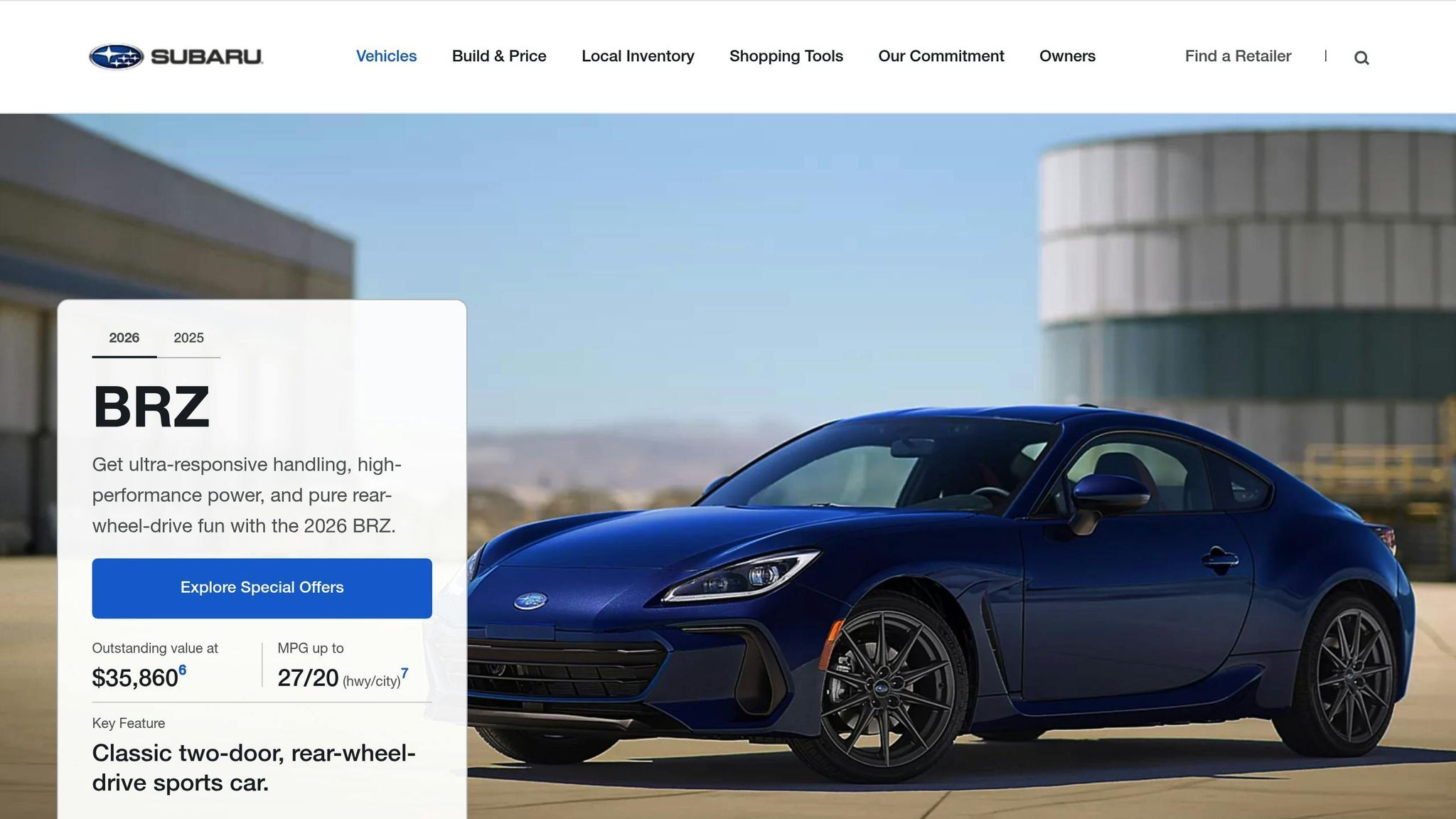
The Subaru BRZ stands out with a 5-year depreciation rate of just 30.2% [3]. That’s significantly better than the industry average of 45.6%, making it Subaru's best-performing non-SUV model and placing it 11th overall in value retention [3].
5-Year Depreciation Rate and Residual Value
Over a five-year period, the BRZ loses only $9,424 in value, maintaining 76.4% of its original worth [3][12]. With a price tag under $30,000, it’s an affordable sports car option that also holds its value better than its sibling, the Toyota GR86 [2]. These figures highlight why the BRZ is such a standout in its category.
Market Factors Influencing Value Retention
The BRZ owes its strong value retention to its distinctive design and engineering, which set it apart in Subaru's lineup that is otherwise dominated by SUVs [13]. Subaru as a brand ranks second in resale value, boasting a 5-year resale rate of 61.20% across its models [12]. Karl Brauer, Executive Analyst at iSeeCars, notes:
"The number of sports cars on this year's top 25 retained value list are only exceeded by small SUVs, a vehicle that commonly represents the best-selling model in an automaker's lineup." [3]
The BRZ’s boxer engine is another key factor, reducing vibration and enhancing durability - qualities that contribute to Subaru’s reputation for longevity, with many models reaching 200,000 miles or more [14]. This blend of reliability and strong demand among enthusiasts ensures the BRZ remains a sought-after option in the used car market.
4. Mercedes-Benz A-Class Hatchback
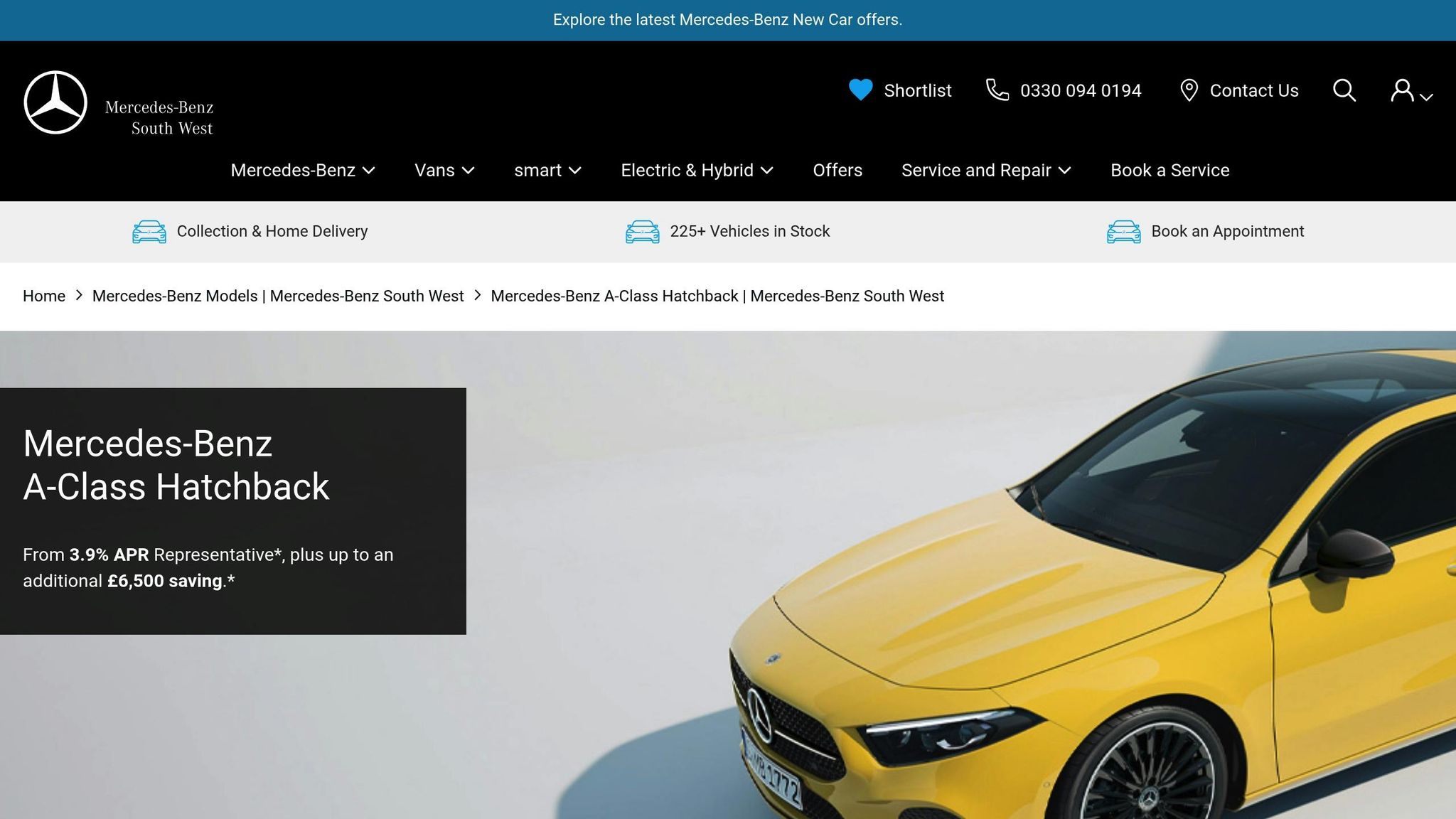
The Mercedes-Benz A-Class Hatchback defies the trend often seen with luxury vehicles, which tend to lose value more quickly than mainstream brands. This compact luxury car holds its ground as a standout in the subcompact segment, maintaining strong resale value compared to its peers [7]. Let’s dive into some key numbers and market dynamics that highlight its performance.
5-Year Depreciation Rate and Residual Value
Over five years, the A-Class retains an impressive 54.5% of its original value, translating to a depreciation rate of 45.5% [7]. For a luxury vehicle, this is a noteworthy achievement [3][7].
Market Factors Influencing Value Retention
Several factors contribute to the A-Class’s ability to hold its value. Within the luxury subcompact category, it ranks second in resale value, with a 54.5% retention rate. It’s just behind the BMW 2 Series coupe, which leads at 56.2%, and edges out the Audi RS 3, which comes in at 54% [7]. Unlike larger luxury models that often face steep depreciation, the A-Class benefits from its compact design [3].
Its smaller size makes it more practical and easier to maintain compared to bulkier luxury vehicles [7]. While the Mercedes-Benz badge adds a layer of prestige, used car buyers in this segment often prioritize reliability and practicality over high-end features [3][7]. This blend of luxury branding, practicality, and affordability ensures steady demand in the resale market.
5. Range Rover Sport
The Range Rover Sport holds a notable position in the luxury SUV segment. While specific depreciation data for the Sport is scarce, its value trends can be understood by comparing it to other models in the Range Rover lineup. For instance, the more budget-friendly Range Rover Evoque retains about 55.2% of its value, while the flagship Range Rover tends to depreciate more quickly, which is typical for top-tier luxury vehicles [3][7][15]. The Sport finds itself positioned between these two extremes, offering a balance of luxury and value retention.
Market Factors Influencing Value Retention
A key factor in the Range Rover Sport's value retention is its desirability. Buyers are drawn to its premium interior materials, smooth driving experience, and an impressive list of standard features - all of which contribute to its appeal in the used car market. Additionally, Land Rover's strong brand reputation and legacy play a significant role in maintaining interest among buyers [15].
That said, luxury SUVs like the Range Rover Sport face certain challenges. In the used car market, flashy badges and high-performance features often don’t carry the same weight as they do for new car buyers [3][7]. This dynamic can sometimes lead to depreciation patterns that are typical for high-end vehicles, where the initial luxury appeal may not fully translate to long-term value.
6. Jeep Wrangler
The Jeep Wrangler stands out as one of the best vehicles for holding its value, with a 5-year depreciation rate of just 33.9% [3]. In simple terms, it keeps about 66.1% of its original value after five years. This performance easily surpasses the midsize SUV average of 51.2% and the overall industry average of 45.6% [3]. Among its peers, the Wrangler ranks #2 for value retention, second only to the Toyota 4Runner [3].
3-Year and 5-Year Depreciation Rate
Starting with an average price of $48,226, the Wrangler retains 73.73% of its value ($35,557) after three years and about 66.1% ($34,110) after five years. That’s a loss of $10,888 over five years [3][17]. The 4-door Wrangler Unlimited performs even better, with some studies showing a 5-year depreciation rate as low as 10.5% [16].
Market Factors Influencing Value Retention
The Wrangler’s impressive resale value isn’t just about numbers - it’s also about its design and legacy. Its iconic, timeless look keeps older models desirable [18]. Combine that with its legendary off-road capability and rugged durability, and you’ve got a vehicle that maintains strong demand in the used market [16][19].
"Jeep Wranglers are known for retaining their value due to their enthusiastic fanbase, as well as their durability and performance across all terrains, especially off-road."
Karl Brauer, Executive Analyst, iSeeCars [16]
The Wrangler’s consistent design and strong brand reputation help it avoid the steep depreciation typical of many vehicles. Its wide range of customization options and fiercely loyal buyer base also contribute to lower long-term ownership costs.
7. Toyota RAV4 Hybrid
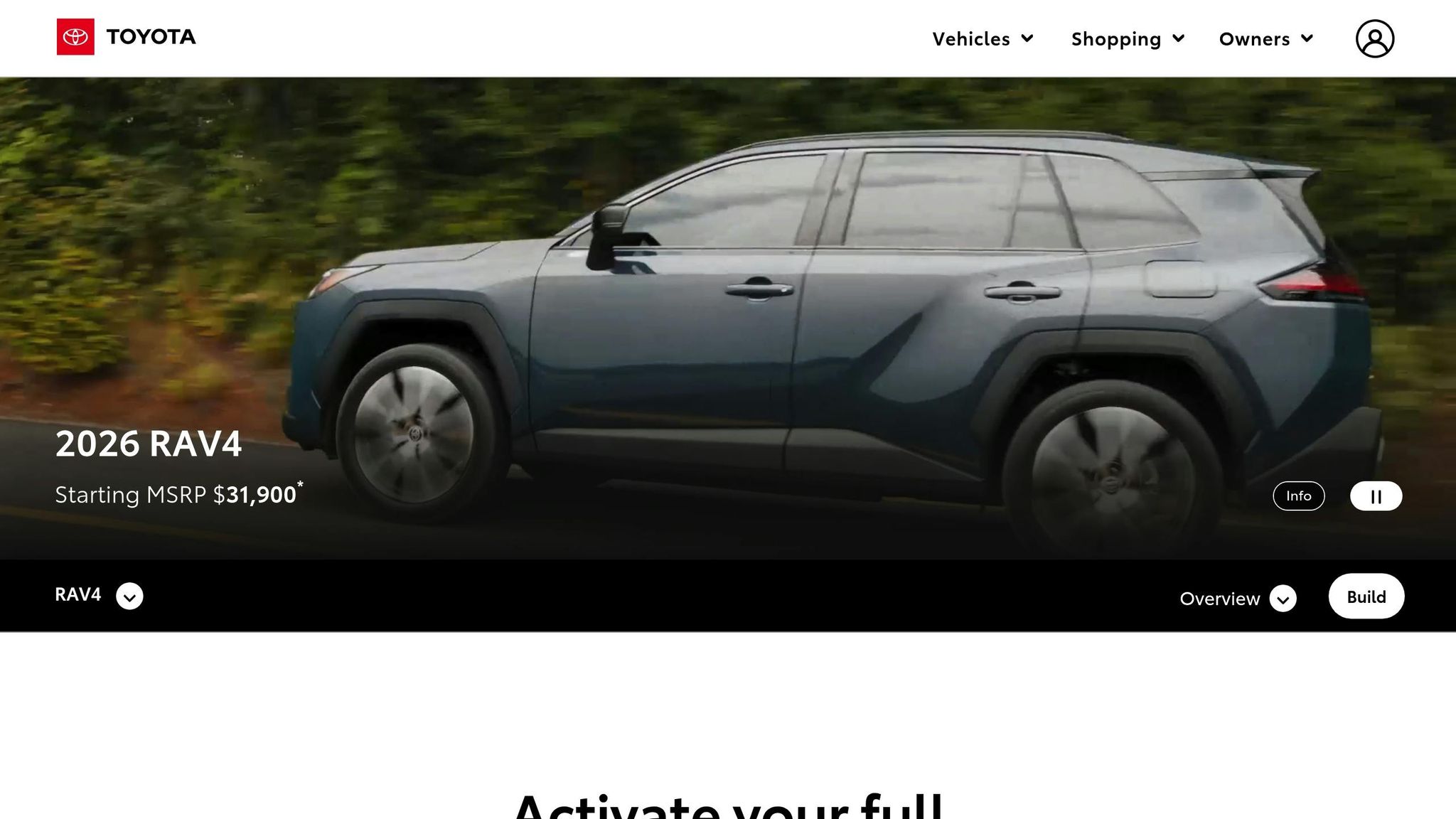
When it comes to hybrid SUVs, the Toyota RAV4 Hybrid stands out as a top performer in value retention. It’s a leader in its class, losing just 31.2% of its value over five years. That means it holds onto an impressive 68.8% of its original price. For context, this is better than the hybrid segment average of 40.7% and the small SUV average of 45.5% [3].
3-Year and 5-Year Depreciation Rate
The numbers speak for themselves. A 2022 RAV4 Hybrid, which starts at $33,825, only loses $2,989 in value over three years - retaining 91.16% of its value with just 8.84% depreciation [1]. After five years, the depreciation climbs to about $10,062, but that’s still a strong performance compared to many competitors [3].
Market Factors Influencing Value Retention
The RAV4 Hybrid’s stellar resale value is backed by Toyota’s well-earned reputation for reliability. It boasts a reliability score of 81/100 [1]. Add to that the nearly 400,000 RAV4 units sold in the U.S. in 2022, and you’ve got a vehicle with strong demand in the used market [20]. What’s more, Toyota’s decision to make the 2026 RAV4 lineup exclusively hybrid highlights the enduring appeal of this powertrain [20].
"Proving that not all alternative fuel vehicles lose money, hybrids sit at the opposite end of the residual value spectrum compared to electric vehicles. These models offer increased fuel efficiency and zero range anxiety, with more consumers hopping on the hybrid bandwagon every day while helping them hold their value." - Karl Brauer, Executive Analyst, iSeeCars [3]
The RAV4 Hybrid’s broad appeal lies in its ability to deliver utility, fuel efficiency, and affordability all in one package. This versatility makes it a favorite in both new and used markets [20][3]. While electric vehicles tend to lose an average of 58.8% of their value over five years, the RAV4 Hybrid’s strong demand keeps its depreciation in check [3].
8. Toyota 4Runner
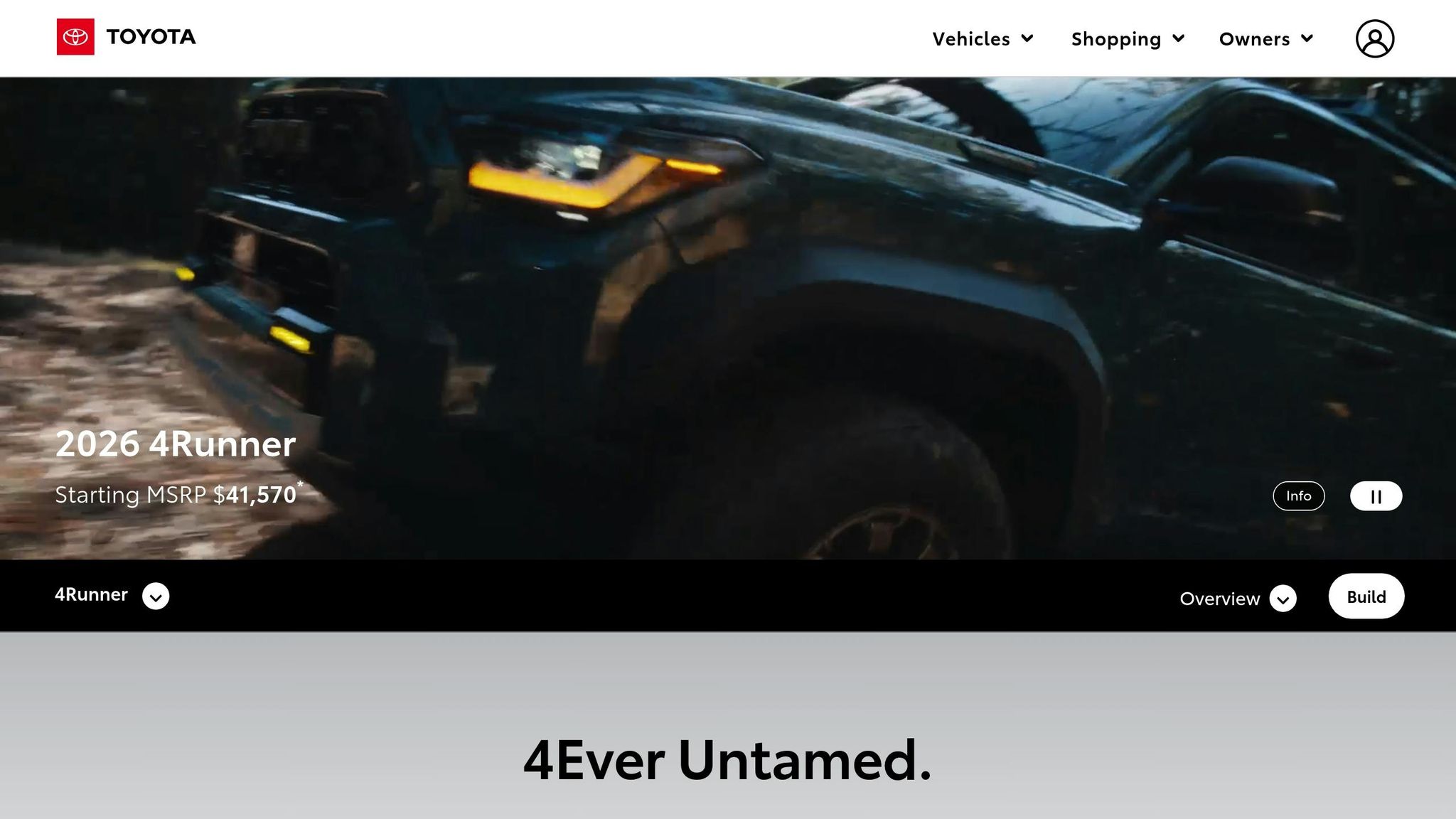
Toyota has built a reputation for vehicles that hold their value well, and the 4Runner is no exception. Following in the footsteps of models like the Tacoma and RAV4 Hybrid, the 4Runner stands out in the midsize SUV category. With a depreciation rate of just 30.1% over five years, it retains an impressive 69.9% of its original value [22]. To put that into perspective, the average midsize SUV loses 50.1% of its value over the same period [22].
3-Year and 5-Year Depreciation Rate
After three years, the 4Runner shows a depreciation rate of only 17.2%, with a resale value of $33,753 [22]. Over five years, it depreciates to 30.1%, leaving it with a resale value of $28,498 [22]. For a 2022 model priced at $45,513, this translates to a value loss of $12,753 over five years. In contrast, the average midsize SUV depreciates by $22,008 in the same timeframe [3].
Market Factors Influencing Value Retention
A key factor behind the 4Runner's impressive value retention is its reliability, with an 87/100 rating, and its dedicated customer base [1]. Unlike many modern crossovers, the 4Runner sticks to a rugged, utilitarian design that appeals to buyers prioritizing durability over luxury.
"The Jeep Wrangler has been one of the best vehicles for retained value for decades. But the Toyota 4Runner managed to sneak past the Wrangler to take the number one slot this year." - Karl Brauer, Executive Analyst, iSeeCars [3]
The 4Runner’s reputation for off-road capability and dependability has fostered a loyal following. Its spacious interior and strong demand in the used car market further contribute to its low depreciation, making it a standout choice for buyers seeking a reliable and durable SUV [1][10][21].
9. Mercedes-Benz G-Class
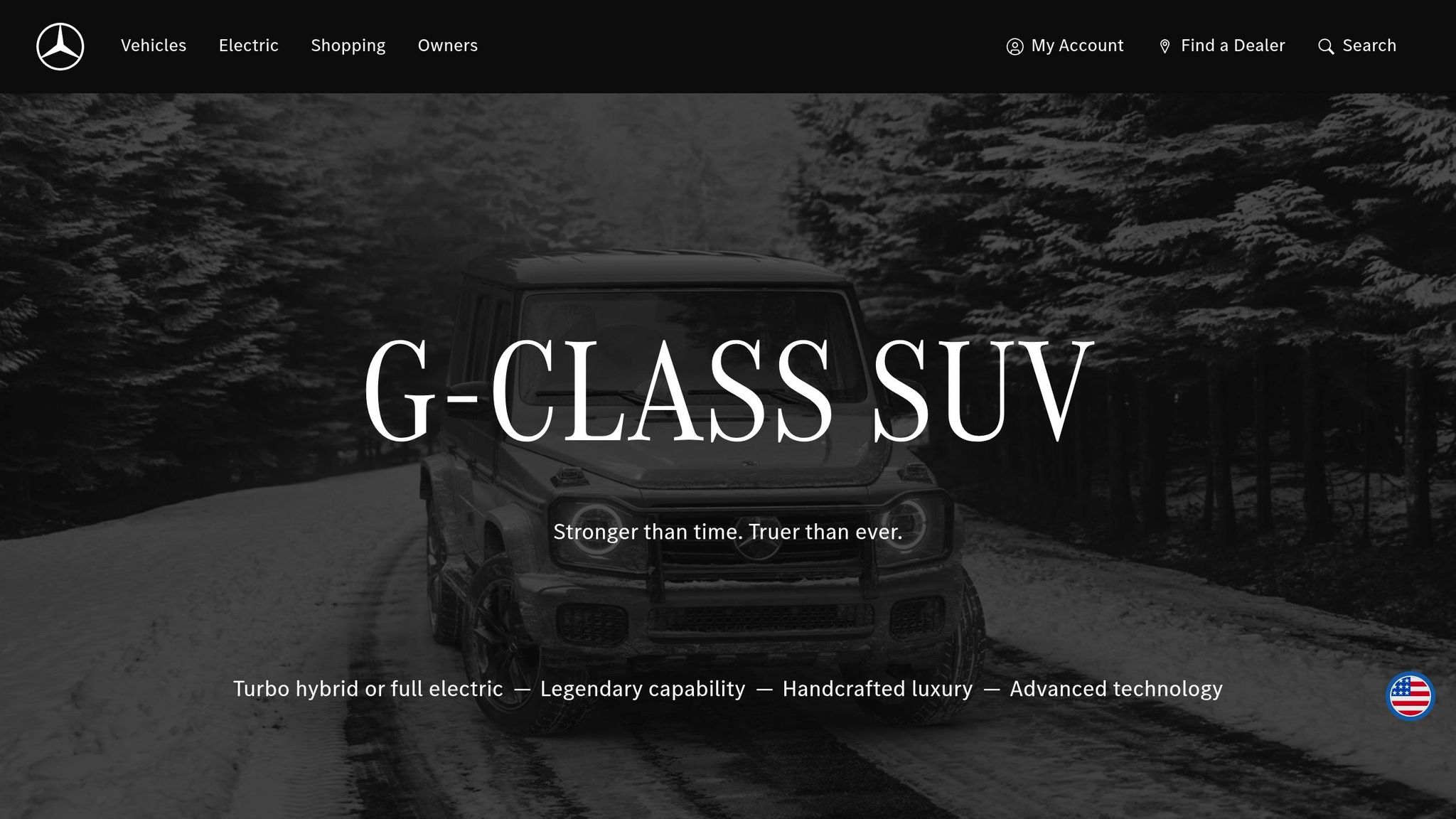
When it comes to vehicles that hold their value, the Mercedes-Benz G-Class stands out as a luxury SUV that bucks the typical depreciation trend. While most high-end vehicles tend to lose value quickly, the G-Class defies expectations. With a starting MSRP of $149,400 for the 2025 model, it has cemented its position as the leader in value retention among large SUVs [4].
5-Year Depreciation Rate
The G-Class boasts an average 5-year depreciation rate of 38.8%, meaning it retains 56.6% of its original value after five years [3][4]. This is a remarkable achievement when compared to the average depreciation rate for large SUVs, which sits at 57.3% [3]. Even competitors like the Range Rover (62.9%) and Cadillac Escalade (61.8%) fall short [3]. While the G-Class does experience a $57,548 loss over five years, it still outshines 95% of models in its category in terms of value retention [3][4].
Market Factors Influencing Value Retention
The G-Class has earned accolades like the Kelley Blue Book Best Resale Value Award for Full-Size Luxury SUVs, where it also ranked 6th overall [4]. Its ability to hold value can be attributed to several key factors: the enduring appeal of its iconic design, the prestige associated with the Mercedes-Benz brand, and consistently high market demand.
"While ranked number one for holding its value, the pricey Mercedes-Benz G-Class still loses over $57,000 after 5 years." - Karl Brauer, Executive Analyst, iSeeCars [3]
Despite the substantial dollar depreciation, the G-Class remains a standout performer in its segment. It significantly outpaces rivals like the INFINITI QX80 (65.0% depreciation) and GMC Yukon (52.4% depreciation) [3]. This strong showing reaffirms its status as a benchmark for value retention in the luxury SUV market.
10. Porsche 911
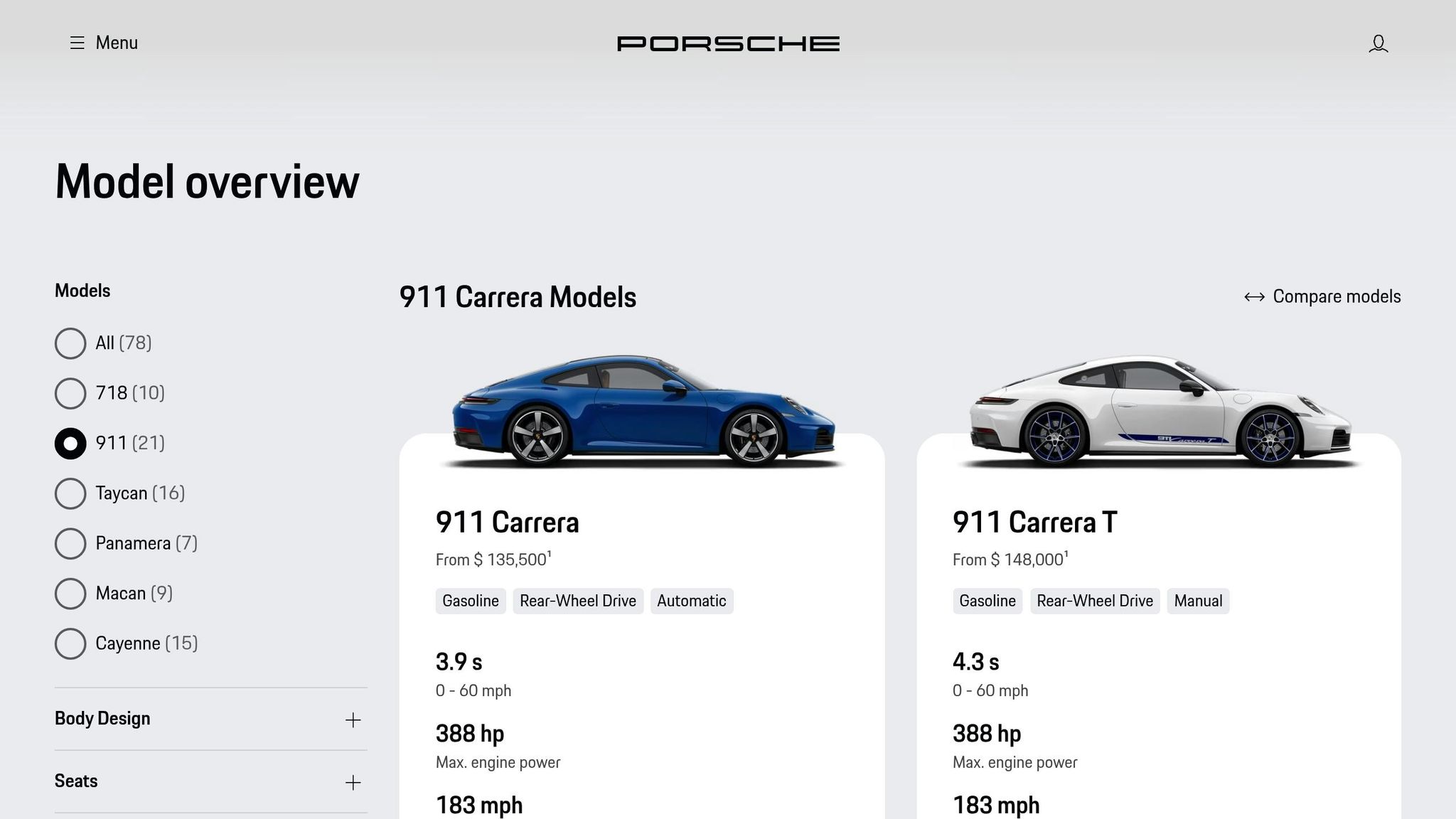
The Porsche 911 sits at the pinnacle of value retention rankings in the U.S. Unlike most luxury cars that lose value quickly, the 911 bucks this trend with remarkable consistency. Its legendary design, racing heritage, and limited production numbers all play a role in keeping its value high.
5-Year Depreciation Rate
When you dive into the numbers, the Porsche 911’s depreciation rate truly stands out. Over five years, it depreciates by just 19.5%, meaning it retains about 80.5% of its original value [3]. Compare that to the industry average of 45.6% depreciation over the same period, and the 911 clearly dominates [3]. Even among sports cars, it leads the way - the Porsche 718 Cayman follows with a 21.8% depreciation rate, and the Chevrolet Corvette trails further at 27.2% [3].
"Porsche's performance coupes, the 911 and 718 Cayman, have consistently ranked at or near the top of our residual value rankings since before the pandemic."
Karl Brauer, Executive Analyst, iSeeCars [3]
Residual Value After Depreciation
After five years, a Porsche 911 typically loses about $24,428 from its original MSRP [3]. Given that the starting price for a new 911 ranges anywhere from $90,000 to $294,000 depending on the trim and features [23], this level of depreciation is impressively low for a luxury sports car.
Market Factors Influencing Value Retention
Several factors contribute to the 911's ability to hold its value so well. Its timeless design ensures older models remain desirable, and Porsche’s strategy of making gradual, thoughtful updates keeps the appeal fresh [3]. Limited production numbers also create scarcity, which helps maintain high prices in the used market [3]. On top of that, the 911 enjoys a devoted fanbase of enthusiasts who keep demand steady.
"Chalk it up to timeless styling, consistent demand, and Porsche's commitment to refinement over reinvention. That $24,000 drop in five years is astonishingly low for a luxury sports car."
Vehicle Depreciation Comparison
Knowing how depreciation works can help you get the most out of your vehicle’s resale value - an important consideration for anyone keeping an eye on their budget. By comparing the figures, it’s clear how these vehicles stack up against the industry average depreciation rate of 45.6% over five years [3].
Vehicle | Depreciation Period | Depreciation Rate | Value Retained |
|---|---|---|---|
Porsche 911 | 5 years | 19.5% | 80.5% |
Toyota Tacoma | 5 years | 26.0% | 74.0% |
Toyota Supra | 5 years | ~21–25% | ~75–79% |
Subaru BRZ | 5 years | ~28–32% | ~68–72% |
Mercedes‑Benz A‑Class Hatchback | 5 years | ~35–40% | ~60–65% |
Range Rover Sport | 5 years | ~38–42% | ~58–62% |
Jeep Wrangler | 5 years | ~30–34% | ~66–70% |
Toyota RAV4 Hybrid | 5 years | ~32–36% | ~64–68% |
Toyota 4Runner | 5 years | ~28–32% | ~68–72% |
Mercedes‑Benz G‑Class | 5 years | ~25–30% | ~70–75% |
Every vehicle listed here outperforms the industry average, with the Porsche 911 leading the pack. It retains an impressive 80.5% of its value, losing only 19.5% over five years [3]. In the truck category, the Toyota Tacoma takes the top spot with a depreciation rate of just 26.0% [3].
The rankings highlight the strong performance of trucks, hybrids, and sports cars, which tend to hold their value due to high demand and limited availability. On the other hand, luxury vehicles and electric vehicles (EVs) often depreciate more quickly. EVs, for example, have an average five-year depreciation rate of 58.8% [3]. Despite this trend, the Mercedes‑Benz G‑Class and A‑Class Hatchback stand out as exceptions in the luxury segment, demonstrating better-than-expected value retention.
Conclusion
Vehicles with low depreciation don’t just save you money - they also provide better long-term financial stability. Depreciation accounts for about 36% of annual ownership costs [8], often surpassing expenses like fuel, insurance, and maintenance. For a $35,000 vehicle, opting for a model with strong value retention can save you between $4,500 and $6,650 over five years [6][4]. That’s a significant chunk of change.
Beyond saving money, a car with strong resale value gives you more financial flexibility when it’s time to sell or trade in. It can provide a larger down payment for your next vehicle and reduce the risk of negative equity - where you owe more on your loan than the car’s worth. As Karl Brauer, Executive Analyst at iSeeCars, puts it:
"Depreciation remains the most expensive aspect of buying a new vehicle, and the variation between vehicle types and specific models is something consumers should consider when researching their next purchase." [5]
Our analysis of trucks, hybrids, and sports cars shows that choosing models with low depreciation can make a big difference in ownership costs over time. Vehicles like the Toyota Tacoma, which retains about 73.7% of its value, and the Porsche 911, holding around 80.5%, far outperform the industry average, where cars typically lose about 45.6% of their value over five years [3][4]. Whether you’re into trucks, hybrids, or sports cars, focusing on models with strong value retention is a smart move for your wallet.
At Hello Motors, we know how important it is to invest in a vehicle that holds its value. That’s why our selection of pre-owned cars is carefully curated to help you make a choice that’s both budget-friendly and built to last. Explore our lineup of pre-owned vehicles with proven value retention and make a smarter investment today.