
Compare all-season and summer tires for Ontario roads: temperature limits, handling, costs and why winter tires are needed below 7°C (45°F).
Published Date:
Feb 9, 2026
Last Updated:
Feb 9, 2026

All-Season vs. Summer Tires: Which Is Best for Ontario Roads?
When choosing between all-season and summer tires in Ontario, the decision hinges on the weather and your driving habits. Here's the short answer:
All-season tires are versatile for most of the year, handling wet, dry, and light winter conditions. They're suitable for temperatures between 14°F and 86°F and are cost-effective at $60–$125 per tire. However, they lose traction in harsh winter conditions below 44.6°F and don't perform well on snow or ice.
Summer tires excel in warm weather (above 45°F), offering superior handling, braking, and performance on dry and wet roads. However, they harden and lose grip in cold temperatures, making them unsafe for winter driving. They are pricier and cater to performance-focused vehicles.
Key takeaway: Neither tire type is suitable for Ontario winters. For safety, pair them with winter tires when temperatures drop below 45°F.
Quick Comparison
Factor | All-Season Tires | Summer Tires |
|---|---|---|
Price Range | $60–$125 per tire | Higher cost; premium |
Seasonal Use | Spring, summer, fall | Summer only |
Cold Weather | Poor below 44.6°F | Unsafe below 45°F |
Performance | Balanced, everyday use | High-performance focus |
Durability | Longer tread life | Shorter tread life |
For Ontario's unpredictable climate, consider your vehicle type, driving patterns, and budget. If you need year-round reliability, all-season tires work for three seasons. For peak summer performance, summer tires are the better choice - but always switch to winter tires when the cold sets in.
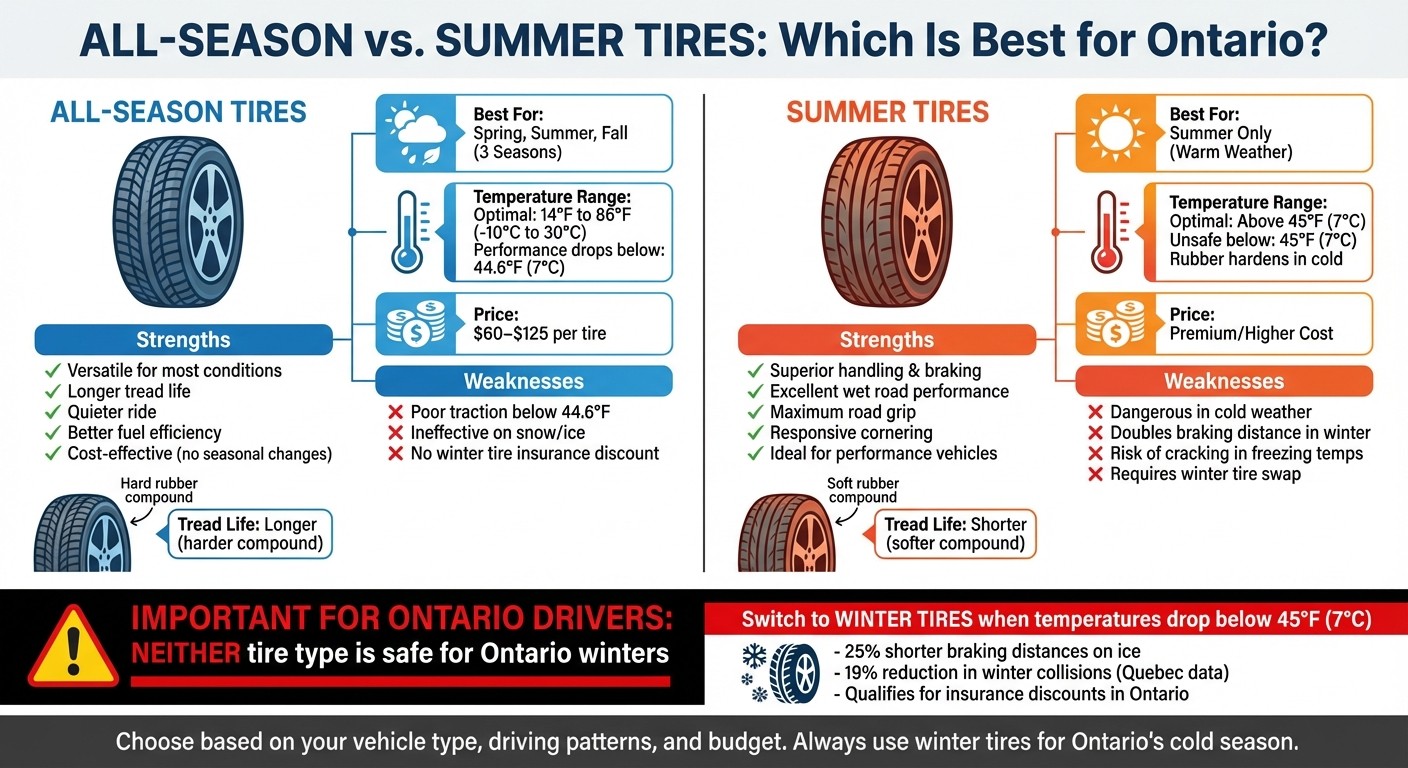
All-Season vs Summer Tires Comparison Chart for Ontario Drivers
Tire Comparison! Summer vs All Season vs All Weather vs Winter Tires
All-Season Tires: What You Need to Know
For Ontario's unpredictable weather, all-season tires provide a balanced option for most driving conditions.
Year-Round Performance
All-season tires are designed with a balanced rubber compound and moderate tread patterns, making them effective in wet, dry, and light winter conditions. They're most efficient in temperatures between 14°F and 86°F (-10°C to 30°C) [4], which covers Ontario's spring, summer, and fall months comfortably.
The tread design features wider grooves to channel water and center notches to handle light slush [11]. This setup not only improves grip but also ensures a quieter ride and better fuel efficiency [4][6]. Still, automotive journalist Jil McIntosh points out a key limitation:
"Despite their name, all-season tires are really for three seasons, and winter is not one of them" [9]
In cities like Toronto, where snow is cleared quickly, all-season tires can work for drivers who avoid highways during severe winter conditions [4][10]. However, their performance drops significantly under harsher winter scenarios.
Performance Limits in Harsh Winter
When temperatures dip below 44.6°F (7°C), the rubber compound in all-season tires hardens, leading to a noticeable drop in traction [1][5]. Unlike winter tires, which have deep sipes and more flexible compounds, all-season tires have a shallower tread design, making them less effective on icy roads or packed snow [4][6].
In Quebec, where winter tires are mandatory, collision rates during winter months dropped by 19% [11]. Additionally, all-season tires don’t qualify for Ontario’s winter tire insurance discount since they lack the "Three-Peak Mountain Snowflake" symbol [6].
Cost and Durability
All-season tires are priced between $60 and $125 per tire [4], making them an affordable choice for year-round use. They save you the hassle and expense of twice-yearly tire changes and storage fees, which can exceed $100 annually [4][6][11].
Their harder rubber compound also means longer tread life compared to summer tires [7]. However, using them year-round accelerates wear, potentially reducing their overall lifespan compared to alternating between seasonal tires [4]. Regular tire rotation and pressure checks are essential to avoid uneven wear [6]. These considerations are crucial when comparing all-season tires to their summer counterparts.
Summer Tires: What You Need to Know
Summer tires are built to perform best when temperatures stay above 45°F (7°C). This design ensures sharper handling and shorter stopping distances, which is crucial for regions like Ontario, where weather can change quickly.
Better Traction and Control
The design of summer tires prioritizes maximum road contact. With reduced grooving, these tires allow more rubber to grip the pavement, improving handling, cornering, and braking in warm conditions. Their stiffer sidewalls and precise geometry enhance agility, making them a favorite for performance-focused vehicles. Additionally, wide grooves in the tread help channel water away during heavy rain, reducing the risk of hydroplaning. As the Bridgestone Team puts it:
"The tread patterns of summer tires have less grooving and put more rubber in contact with the road. They are designed to provide maximum road-holding grip" [7].
However, the same features that make them effective in warm weather become a disadvantage in colder temperatures.
Poor Performance in Cold Weather
The specialized rubber compound in summer tires is not made for the cold. Once temperatures dip below 45°F (7°C), the rubber hardens, losing its elasticity and grip - even on dry roads. CAA Niagara highlights the risks:
"In cold weather, summer tires harden and lose traction, making them unsafe for winter driving" [2].
On snowy or icy roads, the situation worsens. Summer tires can double braking distances compared to winter tires. They also lack deep sipes and biting edges, which are essential for gripping snow and ice. Moreover, the hardened rubber is more likely to crack or chip in freezing conditions, potentially causing irreversible damage [1].
Best for Performance Driving
For drivers who want top-tier handling and performance during Ontario’s warmer months, summer tires are an excellent choice. However, this performance comes at a cost - summer tires are often the most expensive option due to their advanced design and materials [8]. Models like the MICHELIN Pilot Sport 4 S, available in over 200 sizes (17 to 23 inches), cater to this demand [1].
In Ontario, using summer tires effectively means pairing them with winter tires for colder months. This seasonal tire swap ensures safety and optimal performance year-round. While maintaining two sets of tires and scheduling seasonal changes requires an upfront investment, it’s a worthwhile trade-off for drivers seeking peak performance during the summer.
All-Season vs. Summer Tires: Side-by-Side Comparison
Let’s break down the differences between all-season and summer tires to help Ontario drivers navigate the challenges of fluctuating temperatures.
Comparison Table
Here’s a quick look at how these two tire types measure up in key areas of performance and practicality:
Factor | All-Season Tires | Summer Tires |
|---|---|---|
Price Range | $60–$125 per tire [4] | Higher cost; premium pricing [8] |
Year-Round Use | Usable in mild climates; suitable for "3-season" use in Ontario [4][8] | No; designed exclusively for warm months [2] |
Seasonal Performance | Balanced for wet, dry, and light snow [7] | Optimized for warm, dry roads and heavy rain [7] |
Tread Life | Shorter lifespan with softer, high-performance compounds [7] | |
Handling | Moderate, designed for everyday driving [7] | Exceptional; highly responsive and agile [7] |
Noise Levels | Lower; engineered for a quieter ride [4] | Moderate to high; prioritizes road feedback [8] |
Comfort | High; smoother ride quality [4] | Moderate; firmer for precision steering [7] |
Temp. Threshold | Performs well above -10°C [4] | Hardens and loses grip below 7°C [2] |
When temperatures dip below 45°F (7°C), both tire types start to lose flexibility and grip [5][8]. For Ontario drivers, where fall and spring can bring unpredictable weather, this is a critical consideration. Neither all-season nor summer tires can replace winter tires when the cold sets in.
All-season tires stand out for their longer tread life and lower upfront costs, making them a practical choice for those seeking reliable, budget-friendly performance across three seasons. On the other hand, summer tires excel in handling and braking during warm weather, offering precision and responsiveness at the cost of a shorter lifespan and higher price tag [7][8].
What Ontario Drivers Should Consider
At Hello Motors, we understand that Ontario's ever-changing weather requires thoughtful tire decisions. Here's what drivers should keep in mind:
Ontario's Weather Patterns
Ontario’s climate ranges from hot, humid summers to freezing, icy winters, making tire selection a challenge. When temperatures dip below 7°C (45°F), summer and all-season tires start losing the flexibility needed for proper traction[1]. Specifically, summer tires harden in the cold, leaving them prone to cracking or tread damage[1].
All-season tires, often referred to as "3-season tires"[4], are designed for a variety of conditions but fall short in harsh winter weather. As automotive journalist Jil McIntosh puts it:
"All-season tires are really for three seasons, and winter is not one of them."[9]
Road Conditions and Safety Factors
Ontario’s diverse geography introduces different driving challenges. Urban areas like Toronto, where winters are milder and roads are well-maintained, might allow for all-season tires during warmer months. However, for those venturing into snowy or rural areas, winter tires are a safer choice.
Highway drivers should also be mindful of black ice, which often forms on bridges and overpasses during freezing temperatures[3]. Winter tires are proven to reduce braking distances by up to 25% on icy, snowy, or frosty roads[3]. In fact, data from Quebec shows that mandatory winter tire use has reduced winter collisions by 19%[11]. These safety benefits, combined with Ontario's variable road conditions, also impact long-term tire costs.
Long-Term Costs
While sticking to all-season tires year-round might seem like the cheaper option - avoiding the expense of a second set and biannual tire changes - the overall cost is more complex. All-season tires, made with harder compounds, often last longer. However, using them continuously can lead to faster wear compared to alternating between seasonal tires, especially if they’re stored correctly[4]. Rotating between two sets of tires can actually extend their lifespan, even when factoring in swap and storage fees[9].
Another financial perk? Ontario drivers who use winter tires often qualify for auto insurance discounts, which aren’t typically offered for all-season tires[3]. Additionally, maintaining proper tire pressure - especially during cold snaps - is key. Underinflated tires not only wear out faster but also hurt fuel efficiency[12].
How to Choose the Right Tires
Your Driving Patterns
If your daily commute keeps you on smooth highways in Southern Ontario, all-season tires should handle the job during warmer months. However, if your route includes areas prone to early freezing - like shaded roads, bridges, or overpasses - opt for tires with better grip in cold conditions [3]. Keep an eye on tread depth; a minimum of 4mm (5/32") is essential for safely channeling water and snow [5]. And remember, tires older than 10 years should be replaced, even if the tread looks fine [12].
For those who prioritize performance, summer tires shine on warm pavement (above 45°F or 7°C), offering sharper steering and shorter braking distances [2].
Vehicle Type and Performance Needs
Sports cars and high-performance sedans thrive on summer tires, thanks to their enhanced grip and agility [2]. On the other hand, family vehicles like sedans, SUVs, and minivans are well-suited for all-season tires, which balance comfort and durability [1]. Stick to the manufacturer's recommended tire size, speed rating, and load capacity [13], and avoid mixing different types of tires on the same vehicle [3].
Budget and Maintenance
All-season tires typically cost between $60 and $125 per tire, and they save you from the expense of seasonal changes [4]. Summer tires, while more expensive due to their specialized materials, deliver higher performance [8]. Using two sets of tires and rotating them seasonally can extend their lifespan and reduce long-term costs [6]. To save on mounting and balancing fees, consider investing in tire and wheel packages with separate rims [13]. Don’t forget to factor in local storage rates [4] and check if your insurance provider offers discounts for proper tire maintenance [6].
Conclusion
Deciding between all-season and summer tires comes down to Ontario's climate and your driving habits. Summer tires shine when temperatures are above 7°C (45°F), offering precise handling and shorter braking distances. On the other hand, all-season tires work well across spring, summer, and fall but fall short in severe winter conditions [6].
When temperatures dip below 7°C, winter tires become crucial, reducing braking distances by as much as 25% on icy roads [3]. For sports car enthusiasts who prioritize performance, summer tires are a top choice, while drivers of sedans and SUVs often prefer the balanced capabilities of all-season tires.
All-season tires typically cost between $60 and $125 each and are a good option for those who want to avoid changing tires seasonally. However, using dedicated summer and winter tires can extend tread life and might even qualify you for insurance discounts [6]. To stay safe on Ontario’s roads, ensure your tires maintain a tread depth of at least 4 mm (5/32") and check tire pressure regularly.
Ultimately, your best option depends on where you drive, your vehicle type, and how much you value performance. Choosing tires that align with Ontario’s changing seasons will help you stay safe and get the most out of your driving experience.