
Accident history permanently reduces resale value — typically 10-30%, higher for structural or luxury damage; quality repairs and full records can limit losses.
Published Date:
Dec 17, 2025
Last Updated:
Dec 17, 2025
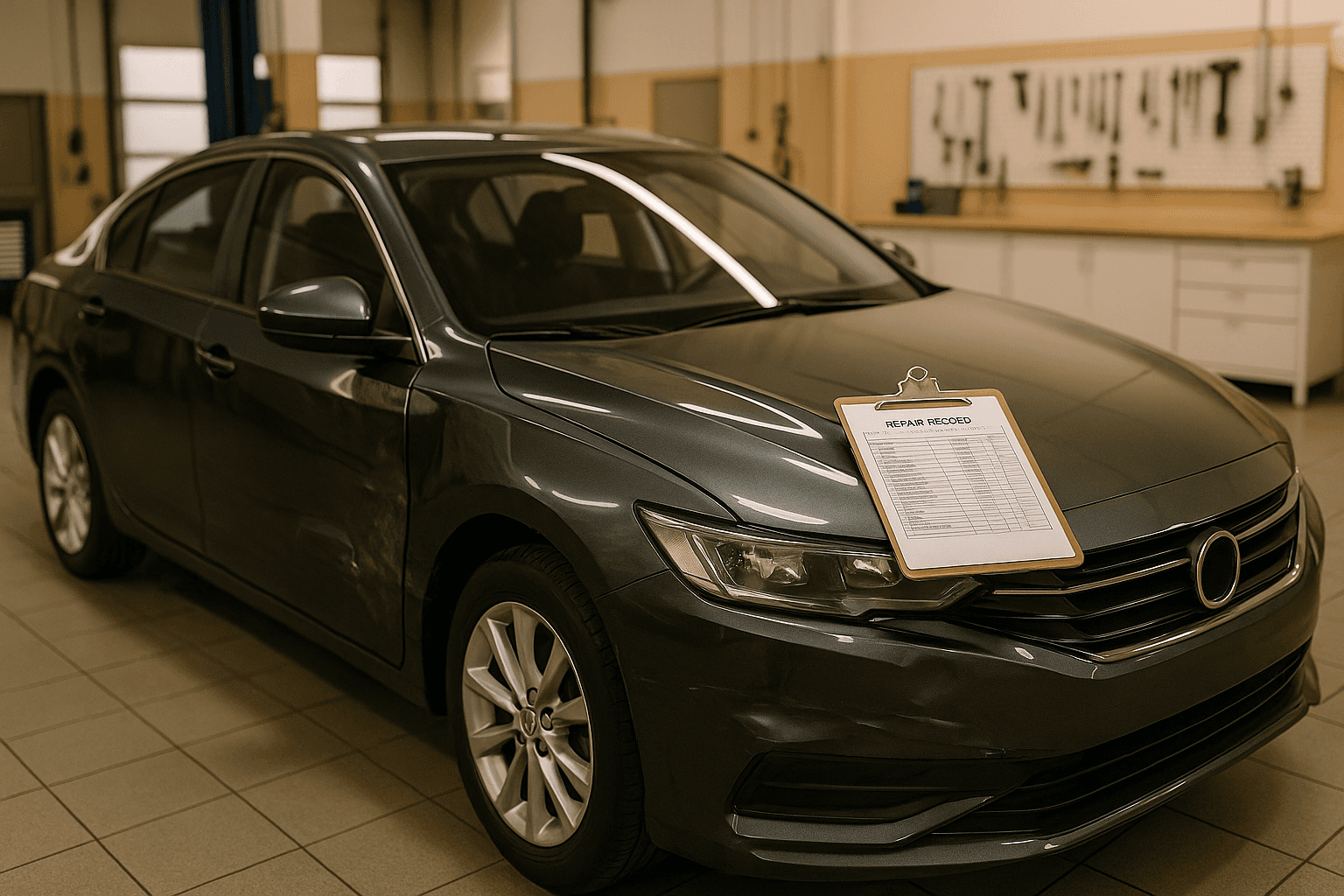
How Accident History Affects Car Value
When a car has been in an accident, its value drops - sometimes significantly. Even after repairs, the accident history becomes a permanent part of the vehicle’s record, visible to buyers and dealerships through reports like CARFAX. Here’s what you need to know:
Value Loss: Cars can lose 10% to 30% of their value immediately after an accident. Severe damage, like structural issues, can cause a 50%+ drop.
Buyers’ Concerns: Accident history raises red flags about safety and reliability. Vehicles with accidents often sell for $1,700 less than similar cars without accidents.
Trade-In Impact: Dealerships typically offer 15% to 30% less for cars with accident records.
Repair Quality Matters: Using certified repair shops and OEM parts can help preserve resale value but won’t erase the stigma.
Transparency is Key: Sellers must disclose accident history and provide detailed repair records to build trust and negotiate better prices.
Understanding the financial impact of accident history helps both buyers and sellers make informed decisions. For sellers, filing a diminished value claim and using high-quality repairs can help recover some losses. For buyers, always check vehicle history reports and use accident records as a negotiation tool.
What is your car worth after an accident?
How Accidents Reduce Car Value
The financial toll of an accident on a car's value depends heavily on the severity of the damage. A minor scrape on the bumper won't hit your wallet the same way as a crash that involves structural damage or airbag deployment. Knowing how these factors play out can help both buyers and sellers set realistic expectations. Let’s take a closer look at how accident severity, repair quality, and vehicle type influence value loss.
Value Loss by Accident Severity
Minor cosmetic issues like scratches, dents, or bumper scuffs can knock $500 to $2,500 off a car’s value. For a $25,000 car, that’s about 2% to 10% of its worth. Even small claims can show up on vehicle history reports if the repair costs exceed $1,000, which might raise red flags for future buyers.[1][6]
Moderate accidents - think crumpled fenders, damaged doors, or broken headlights - can cut a car’s value by 10% to 30%. For a $25,000 vehicle, this translates to a loss of $2,500 to $7,500. The extent of the drop depends on factors like how well the repairs were done and the car’s age.[3]
Major accidents, however, are a different story. Structural damage, frame issues, or airbag deployment can slash a car’s value by 50% or more. These types of accidents leave lasting doubts about the vehicle’s safety and performance, making it much harder to sell at a good price.[3][6]
Why Luxury Vehicles Lose More Value
Luxury cars take an even bigger hit when it comes to accidents. Buyers of brands like Mercedes-Benz, BMW, or Lexus expect top-tier quality, and even a minor blemish on the vehicle’s history can raise concerns about repair quality and replacement parts. For instance, a 20% value drop on a $50,000 luxury sedan results in a $10,000 loss - double the $5,000 loss on a $25,000 economy car. This steep depreciation, combined with a smaller pool of interested buyers, makes selling a luxury vehicle with accident history particularly challenging.[6]
Real-World Examples of Value Loss
Let’s break it down with an example. Take a midsize sedan originally valued at $25,000. Here’s how its value might change based on the severity of an accident:
Accident Severity | Value Loss | Remaining Value | Percentage Drop |
|---|---|---|---|
Minor (cosmetic damage) | $500–$2,500 | $22,500–$24,500 | 2%–10% |
Moderate (non-structural) | $2,500–$7,500 | $17,500–$22,500 | 10%–30% |
Major (structural damage) | $12,500+ | Under $12,500 | 50%+ |
Repair quality also plays a huge role in how much value a car retains. A $30,000 car repaired with Original Equipment Manufacturer (OEM) parts at a certified shop might hold onto 85% to 90% of its pre-accident value, staying worth around $25,500 to $27,000. But if the same car is repaired with aftermarket parts, its value might drop to 70% to 75%, leaving it worth just $21,000 to $22,500. That’s a $6,000 difference, showing just how crucial quality repairs can be.[6]
Newer cars with low mileage tend to lose more in dollar terms after an accident compared to older, high-mileage vehicles. For example, a two-year-old car valued at $28,000 might lose $8,400 (30%) after a moderate accident. In contrast, a ten-year-old car worth $8,000 might only lose $1,600 (20%) from similar damage. Even though the percentage drop is higher for the older car, the newer one still ends up with a higher overall value.[2][4]
When selling or trading in a car with an accident history, expect dealerships to offer 15% to 25% less than the car’s pre-accident value. Private buyers are slightly less harsh, typically negotiating discounts of 10% to 20%. But here’s the kicker: up to a third of potential buyers may walk away entirely once they find out about an accident in the car’s past, making it even tougher to close a deal.[6]
How Accident History Gets Recorded
When a car is involved in an accident, that incident becomes a permanent part of its record. Since a car’s accident history can significantly affect its resale value, knowing how this information is tracked is crucial for anyone buying or selling a vehicle. This record stays with the car throughout its lifetime, making it vital for both buyers and sellers to understand how the system works. Accurate disclosure during the sales process is not just good practice - it’s essential.
Vehicle History Reports and VIN Tracking
Every vehicle has a unique 17-character VIN (Vehicle Identification Number) that serves as its fingerprint. This VIN is the key to tracking a car’s history. Services like CARFAX and AutoCheck use the VIN to create a comprehensive timeline of the vehicle’s past. They collect information from insurance claims, repair shops, and police reports to document critical details, such as the date of an accident, the type of damage (e.g., structural, cosmetic, or mechanical), and whether repairs were completed. For example, a report might reveal that a car was in a front-end collision in 2023, suffered frame damage, and was repaired at a certified shop.
Once an accident is recorded, it becomes permanently tied to the VIN, even if the car is restored to excellent condition. This can influence buyer perceptions and often reduces the car’s resale value. Third-party services play a pivotal role in this process by gathering and verifying data from trusted sources to ensure accuracy.
Why Disclosure Matters in Used Car Sales
Accurate and transparent disclosure of accident history is not just a legal obligation - it’s a safeguard for buyers. In most U.S. states, sellers are required to disclose any known accident history, either verbally or in writing, as part of the sales contract. This ensures buyers are fully informed about potential issues before making a purchase. Dealerships, in particular, face stricter rules; failing to disclose prior accidents can result in penalties or legal consequences.
Transparency directly impacts a car’s market value. For instance, a car with a reported accident might sell for up to $1,700 less than a similar vehicle with a clean history. Buyers may also negotiate 10% to 20% off the price, even if the car has been fully repaired [3]. For sellers, providing detailed repair records and a vehicle history report can help build trust and make price negotiations smoother.
Dealerships rely heavily on vehicle history reports to evaluate trade-in and resale values. These reports reveal past accidents, repairs, and any title issues, giving dealerships a clear picture of a car’s condition. Understanding how accident history is recorded - and why accurate disclosure matters - helps both buyers and sellers navigate the used car market with confidence.
How to Minimize Value Loss After an Accident
An accident may leave a lasting mark on your car's history, but there are ways to protect its resale value. Two types of value loss come into play: inherent diminished value, which stems from the accident being on record, and additional depreciation, caused by subpar repairs. While you can’t erase the first, you can take steps to avoid the second. Here’s how to minimize the financial hit beyond the unavoidable loss.
Use Quality Repair Shops and OEM Parts
Choosing a certified repair shop and insisting on OEM (Original Equipment Manufacturer) parts can make a big difference in preserving your car’s value. Certified shops have the training, tools, and expertise to perform repairs that meet industry standards, ensuring your car is restored properly.
OEM parts are designed specifically for your vehicle, maintaining its original specifications. While aftermarket parts might seem like a cheaper option, they can lead to further value loss. Substandard parts not only compromise safety but also deter potential buyers.
Even with proper repairs, accident-damaged cars typically lose 10% to 25% of their market value. However, using certified repair shops and OEM parts can help reduce additional depreciation. In fact, vehicles repaired with OEM parts at reputable facilities can sell for $1,000 to $2,000 more than those fixed with generic parts at unknown shops[8][5].
Keep Detailed Repair Records
Comprehensive repair records are your proof of quality restoration. These documents reassure potential buyers that your car was professionally repaired, making them more likely to trust the vehicle and your asking price. Without these records, buyers may assume the worst, leading to lower offers or no interest at all.
Save everything: repair invoices, parts receipts, inspection reports, and any warranties associated with the work. Dealerships and private buyers alike value this transparency. When dealerships assess trade-ins, they consider the quality of repairs and whether proper documentation is available. Complete records can help offset the typical 20% to 30% reduction dealerships apply to cars with accident histories[4][3].
To stay organized, store these documents both physically and digitally. Create a dedicated folder for accident and repair records alongside your other vehicle paperwork. When selling your car, mention in the listing that you have complete repair documentation. This simple step can attract serious buyers who value transparency and may be willing to meet your asking price.
File a Diminished Value Claim
Many car owners don’t realize they can recover part of their car’s lost value by filing a diminished value claim. This claim allows you to seek compensation for the reduction in your car’s retail value caused by the accident - separate from repair costs[7].
If another driver caused the accident, you may be able to file this claim with their insurance company, depending on your state’s laws[8]. Recovery amounts vary, but having proper appraisal documentation and filing promptly can strengthen your case. Contact the at-fault driver’s insurance company to understand their process. Some insurers may require an independent appraisal from a certified automotive appraiser who specializes in diminished value assessments.
Keep in mind, the rules for diminished value claims differ by state. Some states have specific laws, while others leave it to the insurance company’s discretion. If you’re struggling with the process or if your claim is disputed, consulting an attorney who specializes in automotive claims can help you navigate the system and maximize your recovery.
Selling or Trading In a Car with Accident History
When it comes to selling or trading in a car with an accident history, a thoughtful approach is essential. Since accident records are permanent and show up on vehicle history reports, success lies in setting a fair price, being upfront about the car’s condition, and understanding how both private buyers and dealerships perceive vehicles flagged for accidents.
How to Price Your Car Realistically
The first step is to figure out your car's market value before the accident. Tools like Kelley Blue Book can help you get a baseline. From there, factor in depreciation based on the extent of the damage. On average, cars lose about 10% to 25% of their value after an accident[8]. For example, a $20,000 car might drop to somewhere between $15,000 and $18,000 after accounting for that depreciation.
The type of damage plays a big role in how much value your car loses. Minor cosmetic issues might only shave off a few hundred dollars, while moderate damage could reduce the value by 10% to 15%[8]. On the other hand, major structural damage - especially on high-end vehicles - can result in a loss of 30% to 50%[9]. For instance, a $50,000 Mercedes-Benz with severe accident damage might only sell for $25,000 to $35,000[9].
Newer cars and those with lower mileage tend to hold onto their value better, even with higher percentage losses[4][2]. To price your car appropriately, research similar models in your area, factoring in details like make, model, mileage, and accident history. Keep in mind that over half of buyers are hesitant to purchase a car with an accident record[9]. Pricing your car competitively can help overcome this reluctance and attract more interest.
Tips for Negotiating Trade-In Offers
Once you’ve set a realistic price, it’s time to prepare for trade-in negotiations. Dealerships often offer 15% to 25% less for cars with accident histories, though discounts can sometimes go as deep as 20% to 30%[6]. For example, if your car’s normal trade-in value is $15,000, you might receive offers between $11,250 and $12,750.
This reduction reflects the car's diminished value, as dealerships rely on vehicle history reports like CARFAX to assess damage. Before heading to a dealership, determine your bottom-line price based on market research, and don’t hesitate to walk away if the offer doesn’t meet your expectations.
To improve your negotiating position, bring detailed repair records showing that certified repair shops used OEM parts. While quality repairs can help preserve some of the car's value[2], even the best documentation won’t completely erase the stigma of an accident history[9]. If dealership offers seem too low, consider selling privately, where discounts are often smaller - around 10% to 20%.
Working with Dealerships Like Hello Motors

Every dealership has its own process for handling accident-damaged vehicles, so clear communication is crucial. Take Hello Motors, for example. This Ontario-based used car dealership, which specializes in flexible financing options for a wide range of customers, emphasizes transparency in trade-ins. When working with dealerships like this, provide thorough repair records, including invoices, parts lists, and certifications from repair shops[2].
Dealerships will run their own history checks[4] and are legally required to disclose accident details to future buyers. Ask about their evaluation criteria, as factors like the severity of the damage, the car’s age, make, model, and repair quality all influence trade-in offers. Timing can also make a difference - dealerships may offer better values if your car’s model is in demand or if they need to replenish inventory. By being upfront and well-prepared, you can navigate the trade-in process with confidence.
Conclusion: What Buyers and Sellers Should Know
A vehicle's accident history leaves a lasting mark on its resale value. Reports like CARFAX ensure that even the most precise repairs can't fully restore a car to its original worth[9]. This reality influences how both buyers and sellers approach transactions.
The financial hit can be steep. Cars with accident histories often sell for about $1,700 less than similar vehicles with clean titles, with losses typically ranging from 10% to 30%. For vehicles with major structural damage, the loss can soar to 50%. Imagine a $50,000 Mercedes-Benz - after severe damage, it might only sell for $25,000 to $35,000[3,14].
For sellers, it's crucial to accept that diminished value is permanent. While high-quality repairs using OEM parts and certified centers can reduce the impact, they can't erase it entirely[8,14]. Providing detailed repair documentation can help justify your asking price, but honesty is key - disclose the accident history instead of hoping it goes unnoticed[4]. Filing a diminished value claim can also help recover some of the financial loss[7]. If you’re trading the vehicle at a dealership, brace yourself for offers that might be 20% to 30% below the car’s pre-accident value[3].
Buyers, on the other hand, need to tread carefully. Always get a full vehicle history report, such as CARFAX, before making an offer. Use the accident history as a bargaining tool to negotiate a fair price[4]. Keep in mind that over half of consumers hesitate to buy vehicles with accident records[9]. Consider the potential for future depreciation and demand complete repair records to confirm the quality of the work done[2].
Transparency is key in this process. Dealerships like Hello Motors prioritize strict disclosure practices to ensure buyers and sellers can negotiate with confidence. Understanding how accident history affects a vehicle's value empowers both parties to make informed decisions in today’s market.